
As the aroma of warm bread fills my kitchen, I can’t help but feel a surge of happiness washing over me. This Pesto Parmesan Sourdough offers a delightful twist on traditional artisan bread, marrying tangy basil pesto with the nutty richness of parmesan. Not only is it a fantastic way to elevate your meals, but it’s also surprisingly simple to make, perfect for anyone seeking a rewarding baking experience. Whether you’re pairing it with a crisp salad or enjoying a slice smeared with butter, this bread is sure to impress friends and family alike. Plus, it’s vegetarian-friendly and offers endless variation possibilities—think swapping pesto flavors or trying different cheeses. Ready to dive into the magic of homemade bread? Let’s get started!
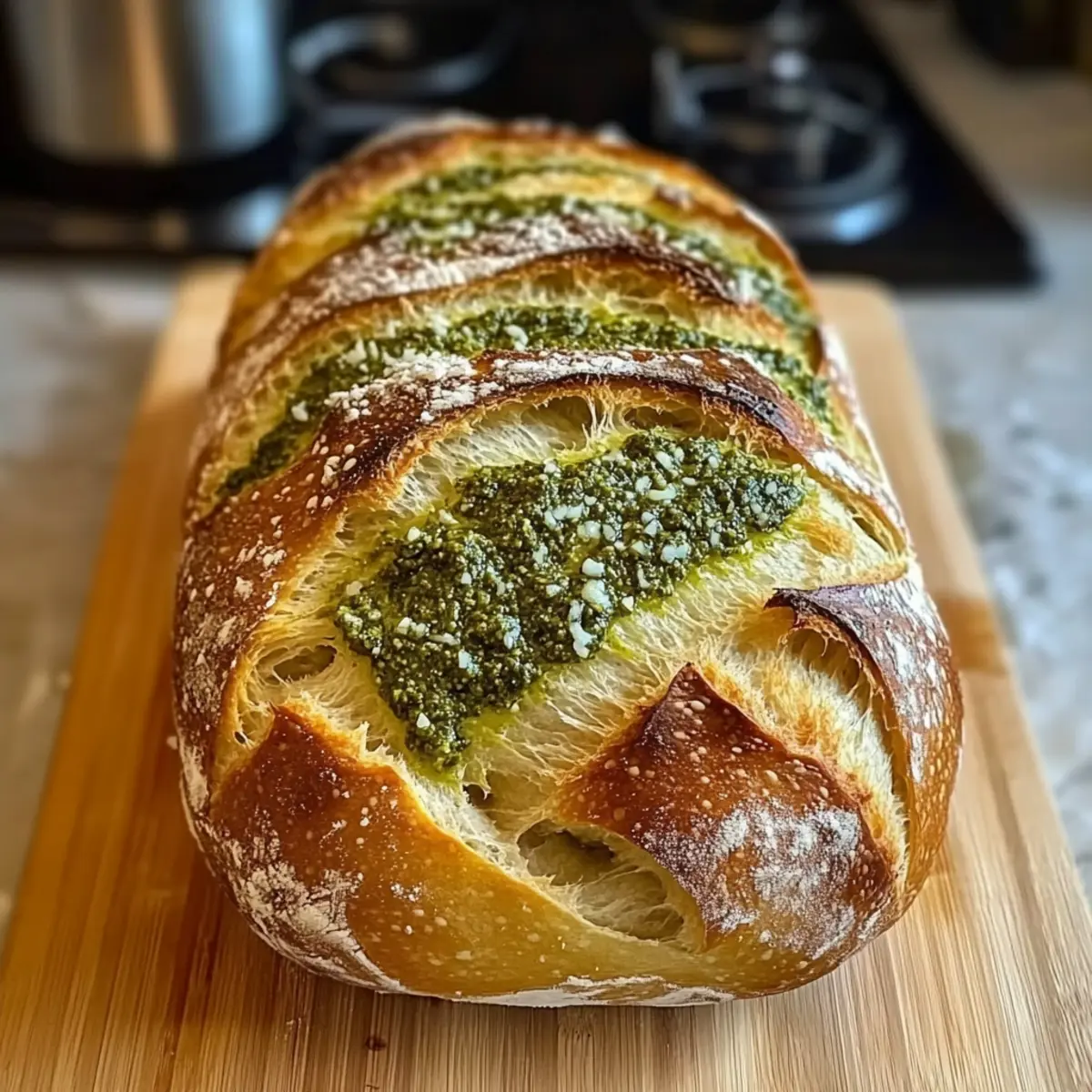
Why is Pesto Parmesan Sourdough a Must-Try?
Irresistible Flavors: The fragrant combination of basil pesto and parmesan cheese creates a unique taste that elevates each bite to gourmet status.
Effortless Preparation: With simple steps, this recipe is perfect for baking beginners and seasoned pros alike, promising satisfaction without excessive fuss.
Versatile Pairing: Enjoy it warm with butter, as a sandwich base, or toasted for breakfast; the possibilities are endless!
Customizable Fun: Don’t hesitate to explore ingredient swaps, like using sun-dried tomato pesto or incorporating your favorite cheeses for diversified flavors.
Time-Saving Delight: This bread’s cold fermentation method makes it manageable for busy schedules while delivering a deliciously crafted result.
Pesto Parmesan Sourdough Ingredients
For the Dough
• Bread Flour – Provides structure and chewiness; substitute with all-purpose flour for a softer texture.
• Water – Hydrates the dough and assists in gluten formation; use filtered water for the best results.
• Active Sourdough Starter – Essential for fermentation and flavor; ensure it’s bubbly and active for optimal results.
• Salt – Controls fermentation and strengthens gluten; fine sea salt creates even distribution throughout the dough.
For the Flavor
• Basil Pesto – Infuses delicious flavor; feel free to use store-bought pesto for convenience or opt for fresh ingredients for the best taste.
• Parmesan Cheese – Adds rich flavor and texture; alternate cheeses like asiago or mozzarella can provide a delightful twist.
Consider this Pesto Parmesan Sourdough a canvas for creativity, inviting you to make it uniquely yours with different herbs or cheeses!
Step‑by‑Step Instructions for Pesto Parmesan Sourdough
Step 1: Mix Ingredients
In a large mixing bowl, combine 3 cups of bread flour, 1.5 cups of lukewarm filtered water, and 1 cup of active sourdough starter. Stir the mixture until just incorporated, ensuring all flour is hydrated. Cover the bowl with a damp cloth and let the dough rest (autolyse) for 30 minutes to develop gluten, creating a foundation for your Pesto Parmesan Sourdough.
Step 2: Incorporate Salt
After the autolyse, sprinkle 1.5 teaspoons of fine sea salt evenly over the dough. Using your hands, gently knead the salt into the dough until fully integrated. This step is crucial for enhancing flavor and strengthening the gluten structure, forming the perfect base for your artisan bread.
Step 3: Stretch and Fold
For the next two hours, perform the stretch and fold technique every 30 minutes. Begin by wetting your hands to prevent sticking, then lift one side of the dough and fold it over itself. Rotate the bowl and repeat this process until you’ve completed four folds. This technique builds the dough’s strength and creates the chewy texture characteristic of Pesto Parmesan Sourdough.
Step 4: Add Fillings
Once the dough feels stronger, it’s time to bring in the flavor. Gently spread about half a cup of basil pesto evenly over the dough, followed by one cup of grated parmesan cheese. Fold the dough over itself to encase the fillings, then shape it into a tight ball. This step infuses the bread with delicious, tangy flavors throughout.
Step 5: Cold Ferment
Carefully transfer the shaped dough into a floured banneton or a bowl lined with a floured cloth. Cover it with a lid or plastic wrap, and refrigerate overnight, about 12-14 hours. This cold fermentation process enhances the flavor complexity and allows the dough to develop a wonderful texture, setting you up for a stunning Pesto Parmesan Sourdough.
Step 6: Preheat & Bake
The following day, preheat your oven to 475°F (245°C), placing a Dutch oven inside to heat up for at least 30 minutes. Once the oven is ready, gently flip the dough onto a sheet of parchment paper. Score the top with a sharp knife, then carefully remove the hot Dutch oven and transfer the dough inside. Bake covered for 20 minutes, then remove the lid and continue baking for another 25 minutes, until it’s golden brown and crusty.
Step 7: Cool and Serve
Once baked, remove the Pesto Parmesan Sourdough from the Dutch oven and let it cool on a wire rack for at least 30 minutes. This cooling period is essential to set the texture and allow flavors to meld. Slice and savor this delightful bread as a sandwich base, toasted with butter, or simply enjoyed on its own!
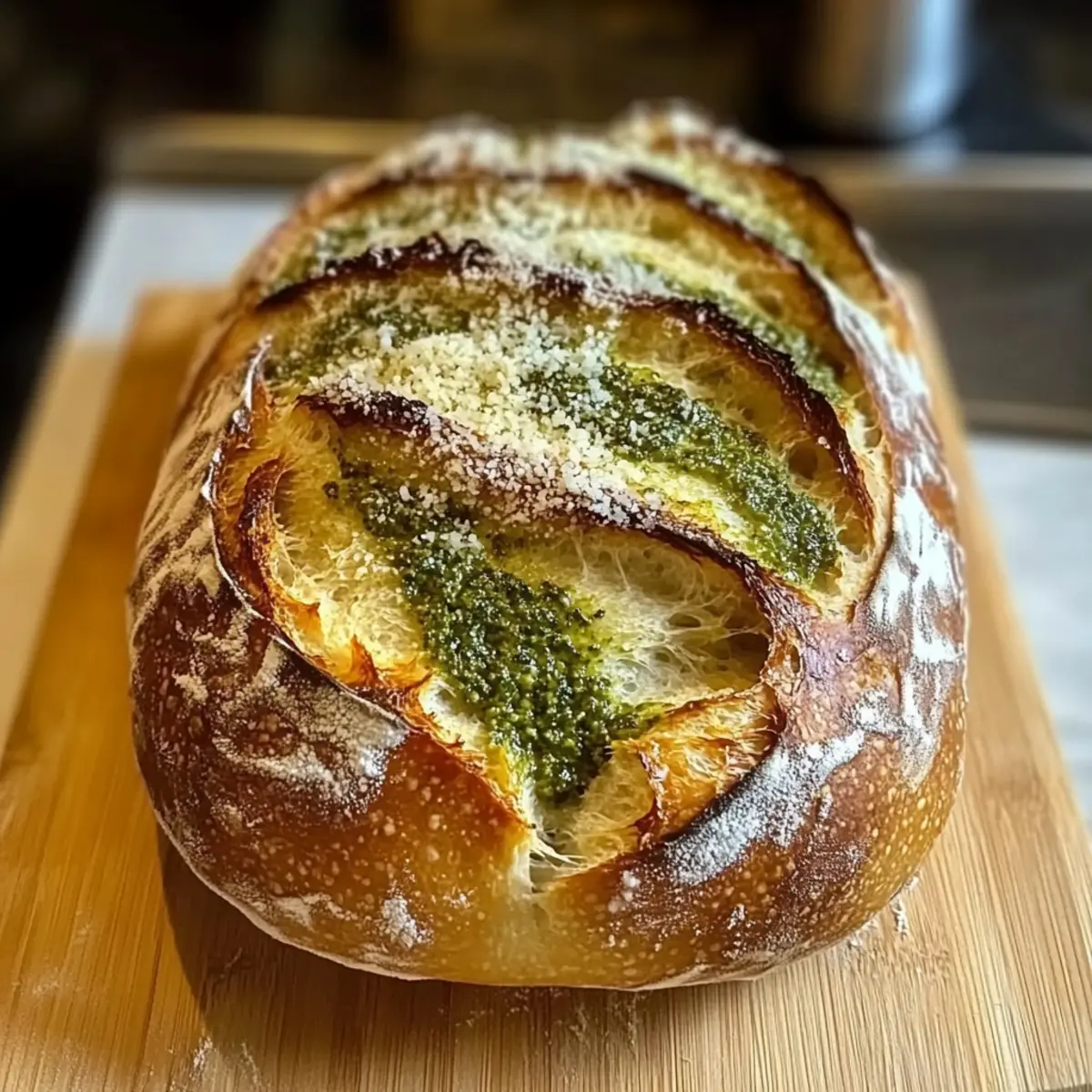
What to Serve with Pesto Parmesan Sourdough
Elevate your upcoming meal with delightful pairings that accentuate the flavors of this irresistible bread.
-
Creamy Tomato Soup: A warm bowl of tangy tomato soup complements the cheesy bread beautifully, creating a cozy dining experience.
-
Mixed Green Salad: Crisp greens with a zesty vinaigrette provide a refreshing contrast, perfectly balancing the rich flavors of the sourdough.
-
Herbed Olive Oil Dip: Serve a dish of herb-infused olive oil for dipping, enhancing the experience with a touch of Mediterranean flair and extra richness.
-
Bruschetta Topping: Top slices of Pesto Parmesan Sourdough with fresh tomatoes, basil, and a drizzle of balsamic glaze for a vibrant appetizer.
-
Roasted Vegetables: A medley of seasonal roasted veggies brings earthy flavors to the table while adding a nourishing element to your meal.
-
Sparkling Water with Lemon: Refresh your palate between bites with a lightly flavored sparkling water, balancing the savory tones of the bread.
-
Homemade Hummus: Pair slices with creamy hummus for a delightful snack option that perfectly complements the tangy elements of the sourdough.
-
Cheese Platter: Present a selection of cheeses alongside the bread for a lovely charcuterie-style experience, inviting variety and rich flavors to the meal.
Storage Tips for Pesto Parmesan Sourdough
Room Temperature: Store your bread in a paper bag for up to 2-3 days to maintain its crust and freshness; avoid plastic to prevent sogginess.
Freezer: For longer storage, slice the Pesto Parmesan Sourdough and place it in an airtight container or freezer bag. It can be frozen for up to 3 months; simply toast or reheat slices directly from frozen.
Reheating: To revive the crust, preheat your oven to 350°F (175°C), wrap the bread in foil, and heat for about 10-15 minutes. This will bring back its delightful texture and flavor.
Bread Box: A bread box is an excellent option for keeping your Pesto Parmesan Sourdough fresh, protecting it from air exposure while allowing ventilation to avoid mold.
Pesto Parmesan Sourdough Variations & Substitutions
Feel free to get creative and customize your Pesto Parmesan Sourdough with these delightful variations that will tickle your taste buds!
-
Dairy-Free: Use a plant-based pesto and substitute nutritional yeast for parmesan to keep it creamy and vegan-friendly.
Exploring dairy-free options opens a world of flavors, allowing you to enjoy this bread while accommodating dietary preferences. -
Gluten-Free: Swap bread flour for a gluten-free bread mix using a 1:1 ratio, adjusting water as necessary for consistency.
Baking gluten-free doesn’t mean sacrificing taste; this adjustment opens the door to delightful new textures without the gluten! -
Cheesy Delight: Experiment with different cheeses like sharp cheddar, goat cheese, or even vegan cheese to switch up the flavor profile.
Cheese lovers can really indulge here; the distinct flavors of various cheeses can create a whole new experience in every bite! -
Spicy Kick: Add red pepper flakes or diced jalapeños to the dough for a spicy twist that will brighten up your taste buds.
Bring in the heat and feel that warmth spread as you savor the lively combination of flavors in each bite! -
Herb-Infused: Mix in fresh herbs like rosemary or thyme into the dough to create an aromatic version that heightens the gourmet experience.
Herbs can elevate your loaf, bringing an entirely new fragrant character that makes it perfect for pairing with rich soups or salads. -
Nutty Crunch: Incorporate toasted pine nuts or walnuts into the dough for added texture and a nutty flavor that complements the pesto beautifully.
Nuts bring delightful crunch and richness, contributing to a more diverse texture that guests will adore! -
Seasonal Twist: Swap basil pesto for a seasonal variant like arugula or spinach pesto, celebrating the flavors of the fresh ingredients around you.
Fresh seasonal choices can inspire your baking journey while enhancing the healthful profile of your sourdough. -
Sweet Variation: For a unique approach, consider adding a bit of honey or maple syrup to the dough or mix in sweet dried cranberries.
This unexpected twist will surprise your palate and create a wonderful bread perfect for breakfasts or brunch!
And for even more ideas, you might enjoy making a fresh salad using your homemade bread as croutons or pairing it with a soothing bowl of soup for a cozy meal.
Make Ahead Options
Preparing Pesto Parmesan Sourdough in advance is a wonderful way to save time during your busy week! You can mix the dough and let it cold ferment in the refrigerator for up to 24 hours, enhancing its flavor without much effort. To prep ahead, simply follow the first five steps of the recipe, then cover the shaped dough tightly in a floured banneton or bowl, and refrigerate. When you’re ready to bake, simply take it out, preheat your oven, and follow the baking instructions as usual. This method not only simplifies your baking day but ensures your Pesto Parmesan Sourdough remains just as delicious and flavorful!
Expert Tips for Pesto Parmesan Sourdough
-
Active Starter: Ensure your sourdough starter is active and bubbly; a weak starter will yield less flavorful bread.
-
Avoid Overmixing: Mix ingredients until just combined to prevent overworking the dough, which can lead to dense bread.
-
Use a Dutch Oven: For a perfectly crispy crust, bake your Pesto Parmesan Sourdough in a preheated Dutch oven; it traps steam effectively.
-
Invest in a Thermometer: Check the internal temperature of the bread; it should reach around 200°F (93°C) for optimal doneness.
-
Experiment with Flavors: Try different pestos or cheeses to customize your Pesto Parmesan Sourdough and suit your palate.
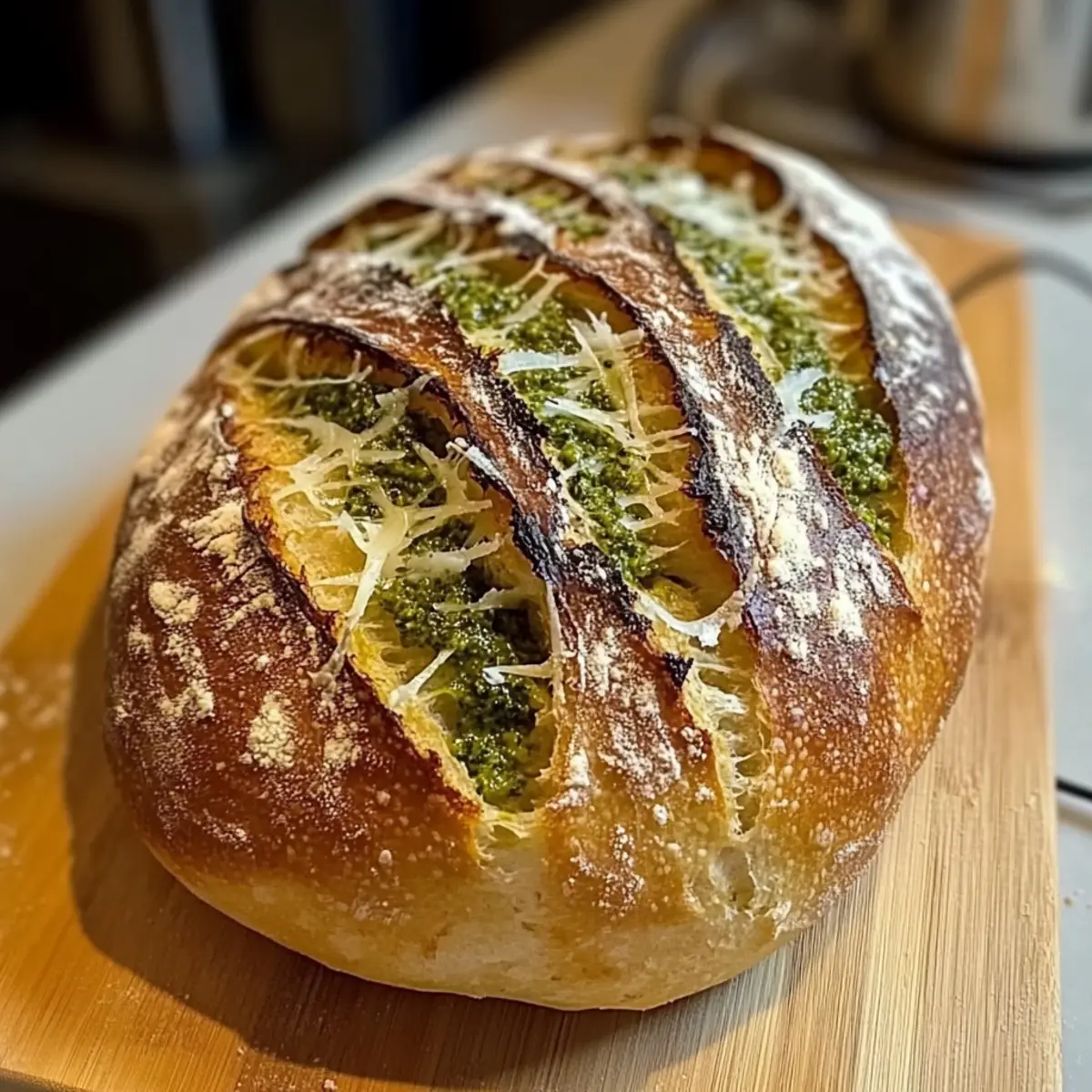
Pesto Parmesan Sourdough Recipe FAQs
What type of bread flour should I use for Pesto Parmesan Sourdough?
I recommend using bread flour for its higher protein content, which helps create structure and chewiness in the bread. If you prefer a softer texture, you can substitute it with all-purpose flour, but the resulting bread might be less airy.
How should I store Pesto Parmesan Sourdough, and how long will it stay fresh?
For optimal freshness, store your Pesto Parmesan Sourdough in a paper bag at room temperature for up to 2-3 days. This helps maintain the crust’s crispiness. It’s best to avoid plastic, as it can lead the crust to become soggy.
Can I freeze Pesto Parmesan Sourdough? If so, how?
Absolutely! To freeze your Pesto Parmesan Sourdough, slice the bread first, then place the slices in an airtight container or freezer bag. It can be frozen for up to 3 months. When you’re ready to enjoy it, you can toast or reheat the slices directly from frozen!
What should I do if my sourdough starter isn’t bubbling?
If you find that your sourdough starter isn’t bubbly or rising, it may need more time or a feeding. Ensure you feed it with equal parts flour and water, and let it rest in a warm area for a few hours. Typically, a healthy starter is bubbly and doubles in volume within 4 to 6 hours after feeding.
Is Pesto Parmesan Sourdough suitable for those with dairy allergies?
This recipe contains parmesan cheese, so it is not suitable for those with dairy allergies. However, you could try substituting with a dairy-free cheese alternative or omitting the cheese entirely, while still enjoying the delightful flavors of basil pesto in the bread.
How can I tell when my Pesto Parmesan Sourdough is fully baked?
To check for doneness, you can use a food thermometer; the internal temperature should reach around 200°F (93°C). Alternatively, a well-baked loaf will have a golden-brown crust and sound hollow when tapped on the bottom. If it’s still soft or doughy, return it to the oven for a few more minutes!
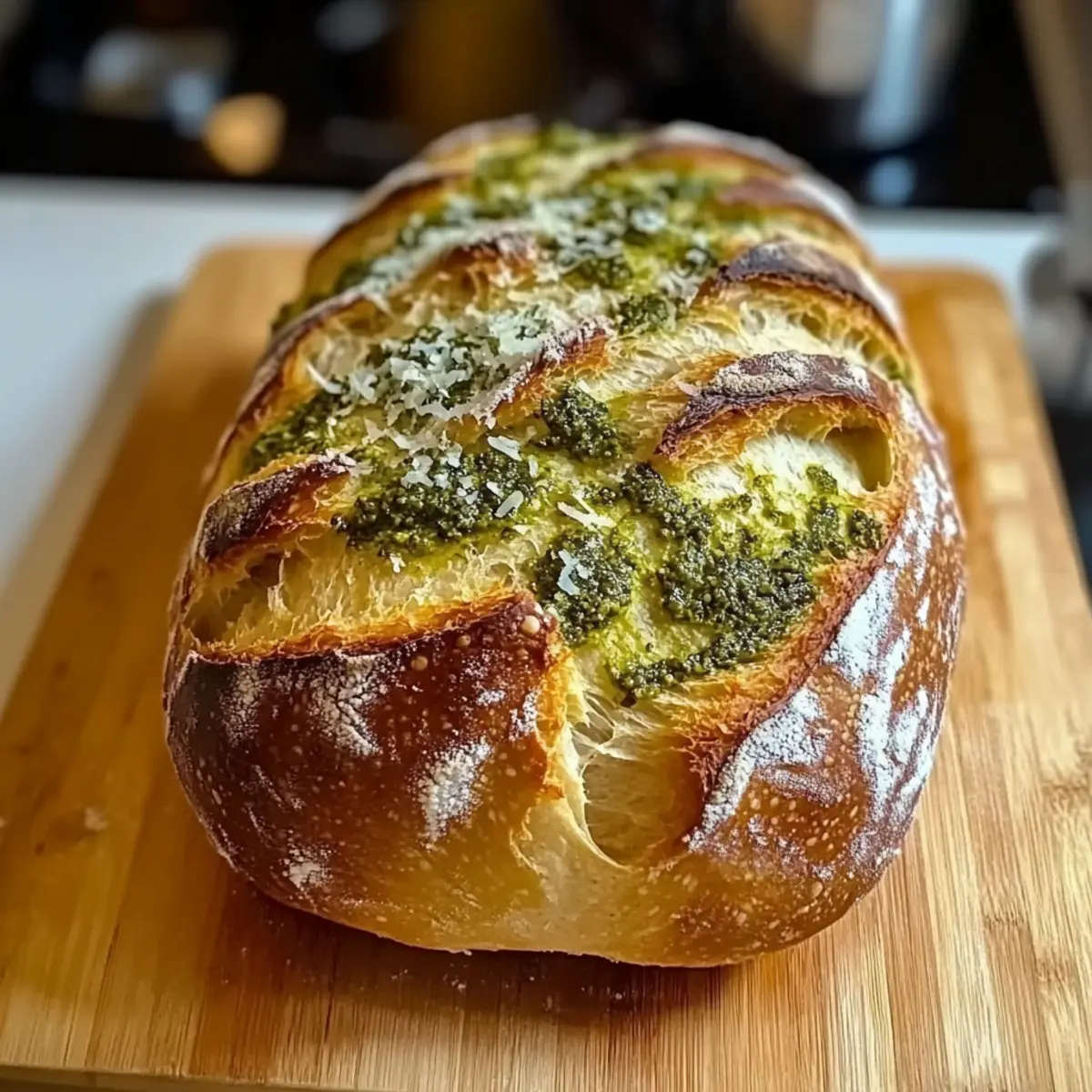
Pesto Parmesan Sourdough: Your New Favorite Artisan Bread
Ingredients
Equipment
Method
- In a large mixing bowl, combine 3 cups of bread flour, 1.5 cups of lukewarm filtered water, and 1 cup of active sourdough starter. Stir until just incorporated, cover, and let rest for 30 minutes.
- After the autolyse, sprinkle 1.5 teaspoons of fine sea salt evenly over the dough and knead until fully integrated.
- Over the next two hours, perform the stretch and fold technique every 30 minutes.
- Spread half a cup of basil pesto over the dough, followed by one cup of grated parmesan cheese. Fold the dough to encase the fillings.
- Transfer the dough to a floured banneton or bowl, cover, and refrigerate for 12-14 hours.
- Preheat your oven to 475°F (245°C) with a Dutch oven inside. Flip the dough onto parchment, score it, and bake covered for 20 minutes, then uncovered for 25 minutes.
- After baking, cool on a wire rack for at least 30 minutes before slicing.
Leave a Reply