
The aroma of sizzling garlic and sweet-tangy tamarind wafts through my kitchen, instantly transporting me to the vibrant streets of Thailand. This authentic Pad Thai recipe is a go-to for those evenings when the craving for something comforting yet exciting strikes. With its chewy rice noodles, crunchy bean sprouts, and the option of savory chicken or firm tofu, this dish is not only easy to whip up but also allows for a delightful twist to delight everyone at your table. Ideal for a quick weeknight meal or a weekend gathering, it’s a perfect balance of flavors that makes cooking fun. Curious about how to bring this dish to life and impress with your culinary skills? Let’s dive right in!
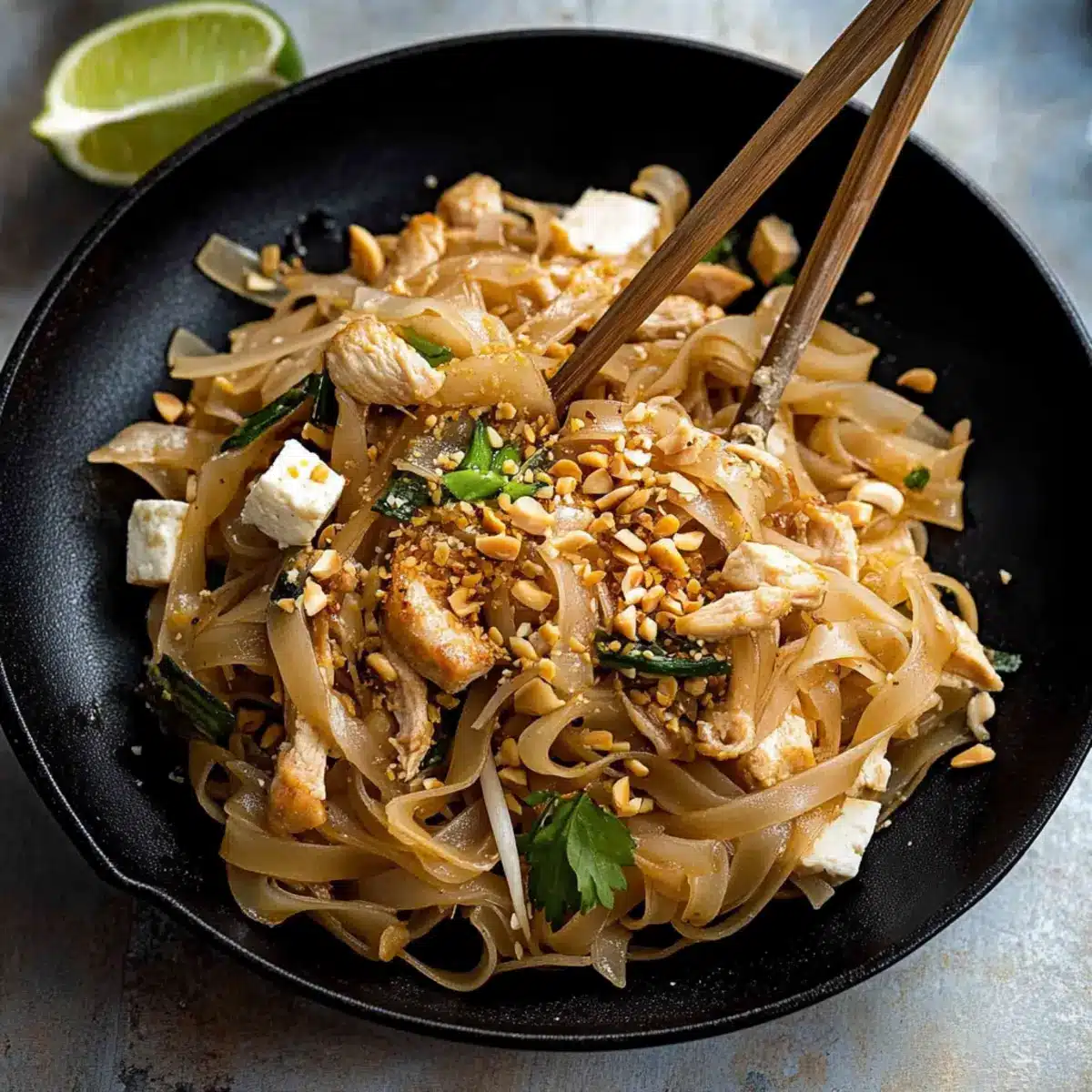
Why is Pad Thai a must-try dish?
Authentic flavors: This recipe captures the essence of Thailand with its sweet, savory, and tangy notes that delight the palate.
Quick to prepare: Ideal for weeknights, you can have a mouthwatering meal on the table in just 30 minutes!
Customizable options: Whether you prefer chicken, prawns, or tofu, this dish is easily adaptable to cater to your dietary needs. Explore more with our Spicy Thai Red for more amazing flavors.
Crowd-pleaser: Perfect for family dinners or gatherings, everyone will savor this delicious dish.
Easy cooking: The simple steps in the recipe make it accessible for both beginners and seasoned chefs alike!
Fresh ingredients: Packed with crunchy bean sprouts and zesty lime, it’ll liven up any meal.
Pad Thai Ingredients
For the Noodles
• Rice Noodles – Main structure of the dish; substitute with similar rice sticks that are 2-3 mm thick to avoid breaking during cooking.
For the Sauce
• Tamarind Puree – Key for the signature sour flavor; substitution: ketchup can be used with tweaks to other sauce ingredients.
• Brown Sugar – Provides sweetness to balance the dish; no direct substitutions specified.
• Fish Sauce – Essential for depth of flavor; can replace with light soy sauce but the flavor profile will differ.
• Oyster Sauce – Enhances umami flavor; not traditional but recommended for everyday versions.
For the Stir-Fry
• Vegetable/Canola Oil – Used for stir-frying; no specific substitutions listed.
• Onion – Adds aromatic sweetness; any onion type can be used.
• Garlic – Provides essential flavor; finely chopped.
• Chicken (Breast/Thigh) – The main protein; substitute with prawns/shrimp or firm tofu for a vegetarian meal.
• Eggs – Contributes to the dish’s texture and richness.
For the Fresh Elements
• Bean Sprouts – Essential for crunch and freshness; keep them crisp!
• Firm Tofu – Provides protein and should be the firmest available variety; avoid soft tofu.
• Garlic Chives – Enhances flavor; can substitute with green onions if not available.
• Peanuts – Adds crunch; finely chopped for garnish.
For Serving
• Lime Wedges – Essential for serving; adds brightness to the dish.
• Ground Chilli/Cayenne Pepper – Optional for heat; sprinkle before serving for a kick.
This vibrant Pad Thai is not just an indulgent treat—it’s an experience that satisfies all ages and appetites!
Step‑by‑Step Instructions for Pad Thai
Step 1: Soak the Noodles
Begin by soaking the rice noodles in a large bowl of boiling water for about 5 minutes until they are tender but still firm to the bite. Drain the noodles in a colander and rinse them under cold water to stop the cooking process, ensuring they remain separate and do not stick together.
Step 2: Prepare the Sauce
In a small bowl, mix together the tamarind puree, brown sugar, fish sauce, and oyster sauce until well combined. This sauce is essential for your Pad Thai’s signature flavor, balancing sweet, salty, and tangy notes. Set the sauce aside while you prepare the other ingredients to allow the flavors to meld together.
Step 3: Sauté Aromatics
Heat 2 tablespoons of vegetable oil in a large non-stick skillet or wok over high heat. Add the finely chopped onion and garlic, sautéing for about 30 seconds until aromatic and slightly golden. This step creates a fragrant base for your Pad Thai, adding depth to the dish.
Step 4: Cook the Chicken
Add the sliced chicken to the skillet, spreading it evenly over the surface. Cook for around 1.5 minutes, stirring frequently until the chicken is no longer pink and nearly cooked through. This will add protein and a savory richness to your vibrant Pad Thai.
Step 5: Scramble the Eggs
Push the chicken mixture to one side of the skillet, creating a gap for the eggs. Pour in the whisked eggs and scramble gently for about a minute until just set. This creates a wonderful texture in the dish, blending perfectly with the other flavors.
Step 6: Combine Ingredients
Stir in the drained noodles, bean sprouts, and prepared sauce to the skillet. Toss everything together vigorously for about 1.5 minutes until the noodles absorb the sauce and become pliable, ensuring each noodle is coated with the delicious flavors of the Pad Thai.
Step 7: Add Fresh Elements
Incorporate the chopped firm tofu and garlic chives into the mixture, tossing gently to combine. Remove the skillet from heat after a minute, allowing the residual warmth to soften the tofu while keeping that crunchy texture from the bean sprouts.
Step 8: Serve and Garnish
Plate your Pad Thai while it’s still hot, garnishing generously with the remaining chopped peanuts and fresh lime wedges. The zest of lime adds brightness, enhancing the dish’s overall flavor, and feel free to sprinkle ground chili for extra heat if desired.
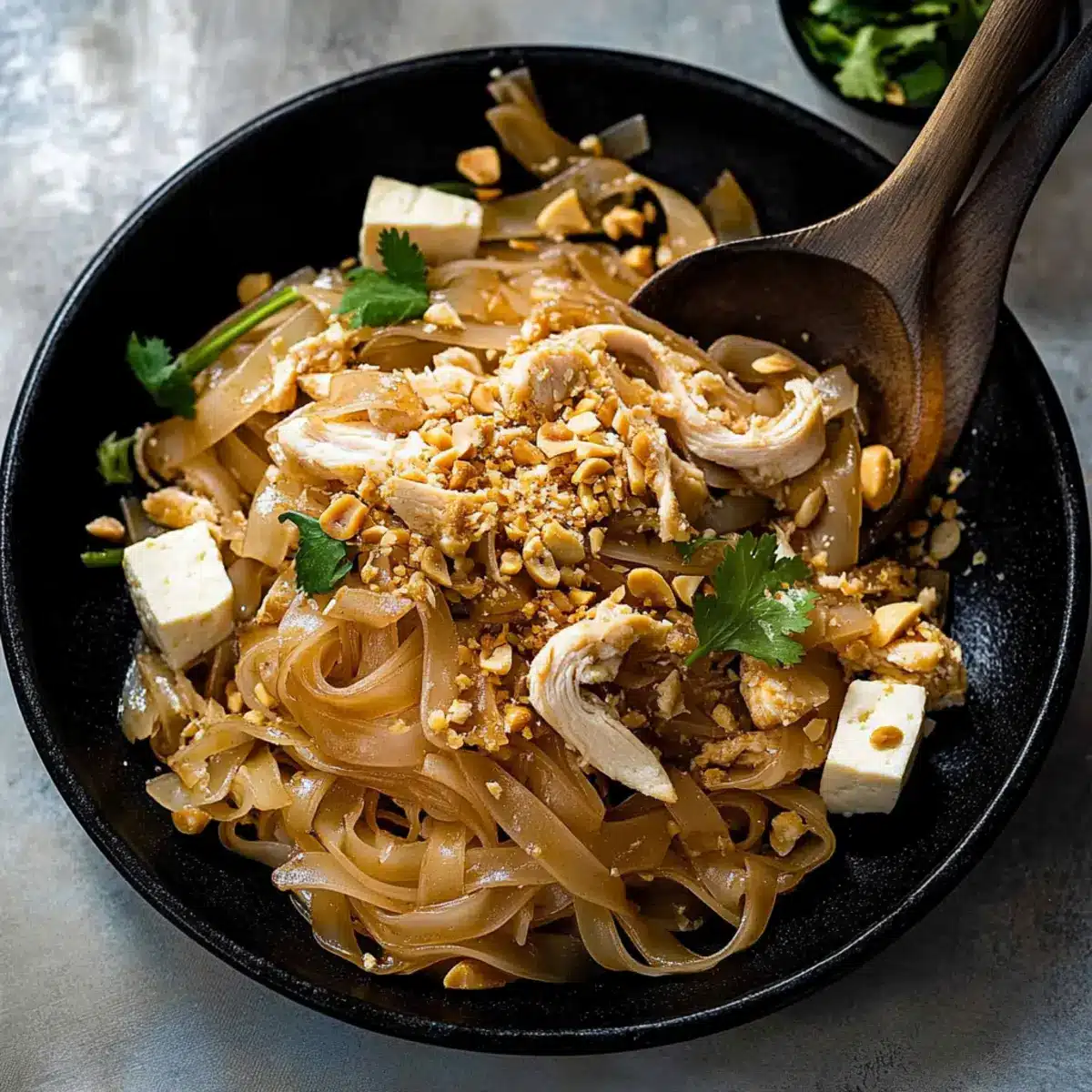
Pad Thai Variations & Substitutions
Feel free to explore these delightful twists on our classic Pad Thai recipe, enhancing flavors and accommodating dietary preferences!
- Protein Swaps: Substitute chicken with prawns or firm tofu for a refreshing twist. Each protein adds its unique flavor profile and texture.
- Vegetarian Delight: Go fully vegetarian by increasing tofu and leaving out the chicken. You’ll still enjoy a hearty meal bursting with flavors!
- Sauce Alternatives: Swap tamarind puree with ketchup mixed with a splash of lime juice for a quick sauce solution that still packs a punch.
- Add Extra Veggies: Toss in colorful bell peppers or snap peas for added crunch and nutrition. This not only enriches the dish but also increases your veggie intake!
- Heat Levels: Desire a kick? Stir in some crushed red pepper flakes or sriracha to the sauce before cooking for an exciting heat level that will satisfy spice lovers!
- Nut-Free Option: Omit peanuts and think about using toasted sesame seeds instead for a similar crunch without the allergens.
- Slightly Sweet: If you love a sweeter flavor profile, add a touch more brown sugar to the sauce to balance out the tanginess of tamarind.
- Flavorful Herbs: Experiment with fresh cilantro or basil added right before serving. These herbs elevate the taste and aroma, harkening to Thai street vendors’ original recipes.
Feel inspired? Dive into our culinary adventures and elevate your dinner game! If you’re up for more adventurous flavors, try the Spicy Thai Red for a twist that’s sure to be a hit.
What to Serve with Authentic Pad Thai
Create a delightful dining experience that complements the savory goodness of this Thai classic.
- Crispy Spring Rolls: These golden, flaky bites add a satisfying crunch and a touch of warmth to your meal, making them an irresistible appetizer.
- Lime Wedges: A must-have for serving, their zesty brightness elevates the flavors of Pad Thai while adding a refreshing tang that balances its richness.
- Coconut Rice: Creamy and subtly sweet coconut-infused rice provides a perfect counterpoint to the savory notes of Pad Thai, rounding out your meal beautifully.
- Thai Iced Tea: The creamy, sweet contrast of this beverage makes it a delightful pairing, enhancing your culinary journey through Thailand’s flavors.
- Fresh Cucumber Salad: Crisp, cool cucumbers with a light vinaigrette offer a refreshing crunch that cuts through the richness of the dish, adding layers of texture.
- Peanut Sauce Dipping Sauce: Perfect for dipping fresh veggies or egg rolls, this flavorful sauce echoes the peanut garnish in Pad Thai, tying the meal together beautifully.
- Mango Sticky Rice: A luscious dessert that balances the savory main course, the sweetness of ripe mango and gentle creaminess of coconut rice create a divine ending.
Expert Tips for Pad Thai
Use the Right Noodles: Ensure you choose the proper rice noodles (ideally 2-3 mm thick) to avoid them breaking while cooking.
Prep Ahead: Always prepare and measure your ingredients before starting to cook; this keeps everything organized and ensures quick stir-frying without stress.
Sauce Adjustments: Feel free to adjust the sauce ingredients according to your taste; adding more tamarind or sugar can enhance the sweet and sour flavors of your Pad Thai.
Heat Control: When stir-frying, maintain high heat to give your ingredients that desirable wok-charred flavor while keeping them tender yet cooked through.
Don’t Overcook: Be mindful not to overcook the noodles; they should be tender but still have a slight bite. Remember, they continue to cook slightly after removing from heat!
Storage Tips for Pad Thai
Fridge: Store leftover Pad Thai in an airtight container for up to 2 days in the fridge. This will help maintain flavor and texture while preventing spoilage.
Freezer: You can freeze Pad Thai for up to 1 month. Just ensure it’s in a well-sealed container or freezer bag to avoid freezer burn.
Reheating: To reheat, thaw in the fridge overnight and then warm in a skillet over medium heat for 3-5 minutes, stirring gently until heated through. This prevents the noodles from becoming mushy.
Freshness Tip: For the best flavor, try to enjoy your Pad Thai immediately after cooking, but these storage tips will help you savor the dish even when enjoying leftovers!
Make Ahead Options
These delicious Pad Thai preparations are perfect for busy weeknights, allowing you to enjoy a homemade meal with minimal effort! You can soak the rice noodles and store them, wrapped in plastic, in the refrigerator for up to 24 hours to prevent them from sticking together. Additionally, you can mix the sauce ingredients and refrigerate it for up to 3 days. For the freshest taste, chop the vegetables and proteins like chicken or tofu ahead of time, storing them separately in the fridge. When you’re ready to serve, simply sauté the aromatics, add your prepped chicken or tofu, and toss in the noodles and sauce for an effortlessly delightful Pad Thai that’s just as flavorful as when made fresh.
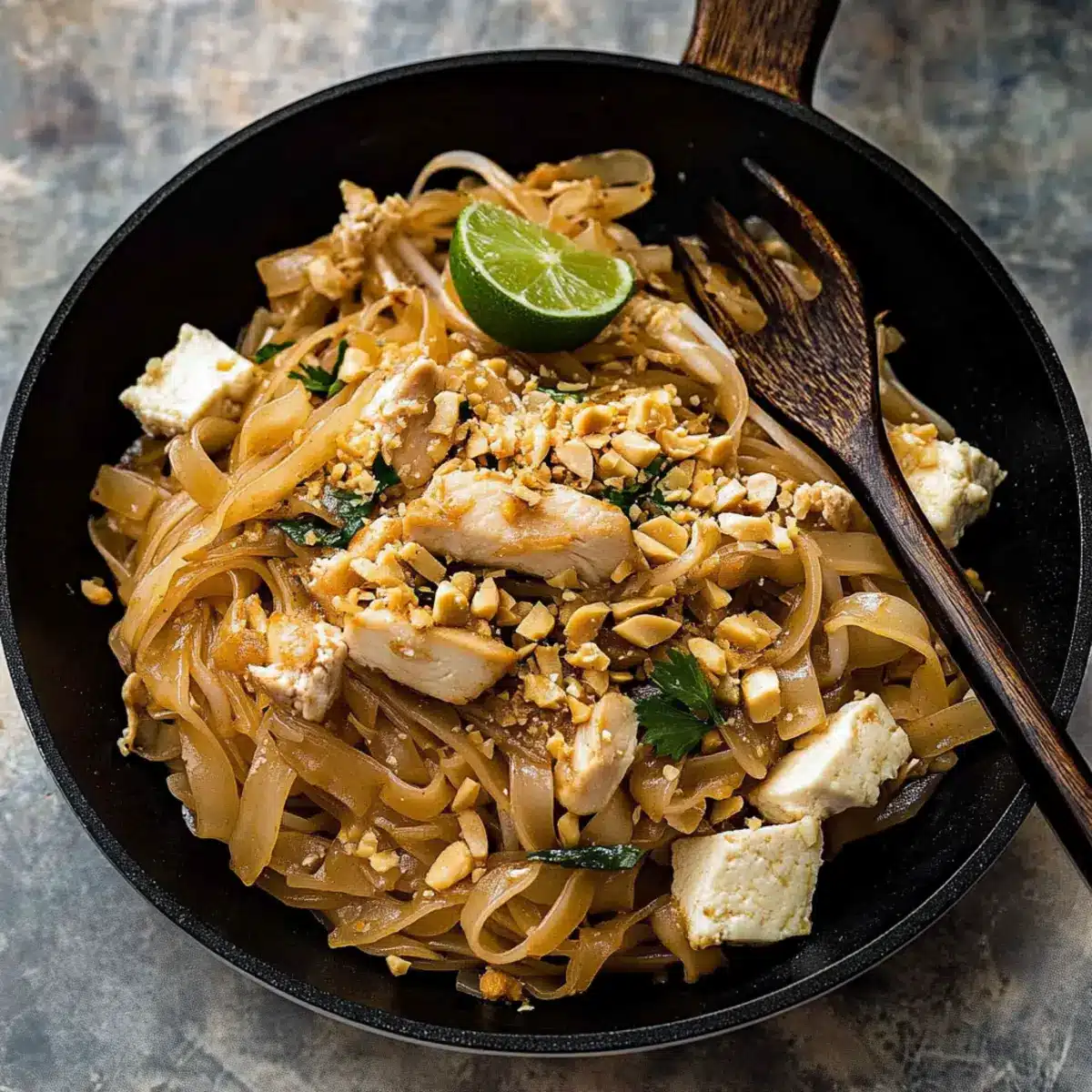
Authentic Pad Thai Recipe FAQs
How do I select the right rice noodles for Pad Thai?
Absolutely! You should look for rice noodles that are about 2-3 mm thick. These noodles hold up well during cooking and won’t break apart easily. I often opt for brands like Chang’s, which provide the perfect texture for the dish.
How should I store leftover Pad Thai?
Leftover Pad Thai can be stored in an airtight container in the fridge for up to 2 days. Just make sure to keep it sealed to maintain its flavor and prevent it from drying out. When reheating, do so in a skillet over medium heat for about 3-5 minutes, stirring gently to warm without overcooking the noodles.
Can I freeze Pad Thai, and if so, how?
Yes, you can freeze Pad Thai for up to 1 month! To freeze, let it cool completely and then transfer it to a well-sealed container or freezer bag. Make sure to remove as much air as possible before sealing. When you’re ready to eat it, thaw it overnight in the fridge, then reheat in a skillet over medium heat for 3-5 minutes until warmed through.
What can I do if my Pad Thai is too sticky?
No worries! If your Pad Thai turns out too sticky, it generally means the noodles were overcooked or not rinsed adequately after soaking. To remedy this, return the dish to low heat and toss in a bit of vegetable oil, stirring gently to separate the noodles. Always ensure to rinse the noodles under cold water after soaking to stop the cooking process and prevent sticking.
Are there any dietary considerations I should keep in mind with Pad Thai?
Absolutely! If you’re catering to vegans or vegetarians, simply substitute the chicken with extra firm tofu, and opt for plant-based sauces. Also, be mindful of allergies; fish sauce can be substituted with light soy sauce for those with soy allergies, although it does alter the flavor profile slightly. Always check if your guests have nut allergies as well, given the peanuts used for garnish.
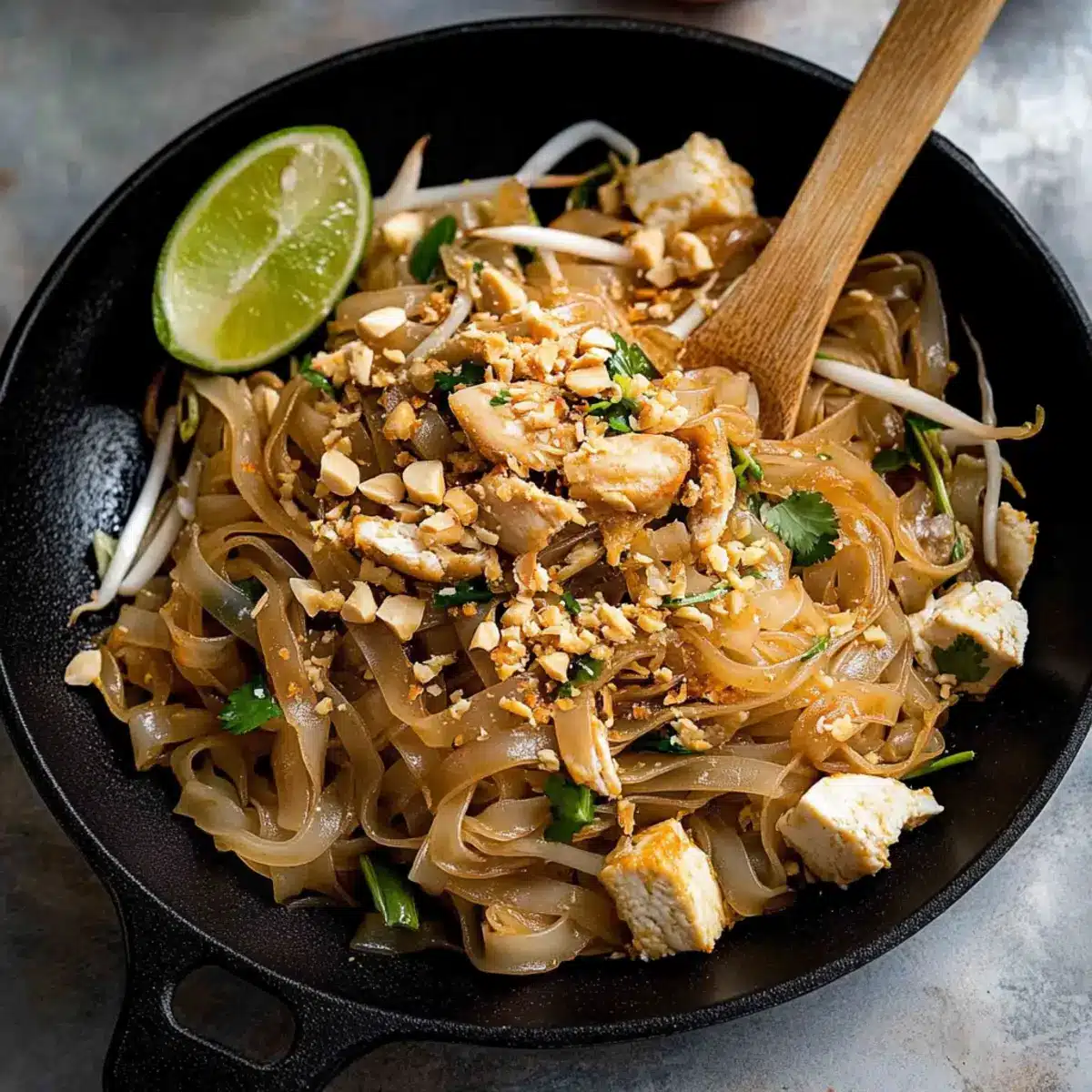
Delicious Pad Thai: Easy Homemade Joy for Any Night
Ingredients
Equipment
Method
- Soak the rice noodles in a large bowl of boiling water for about 5 minutes until tender but firm. Drain and rinse under cold water.
- Mix together tamarind puree, brown sugar, fish sauce, and oyster sauce in a small bowl and set aside.
- Heat vegetable oil in a skillet or wok over high heat. Sauté chopped onion and garlic for about 30 seconds.
- Add sliced chicken to the skillet and cook for around 1.5 minutes, stirring frequently.
- Create a gap in the skillet, pour in whisked eggs and scramble for about a minute.
- Add drained noodles, bean sprouts, and prepared sauce to the skillet. Toss vigorously for about 1.5 minutes.
- Incorporate chopped firm tofu and garlic chives, tossing gently to combine.
- Serve hot, garnishing with chopped peanuts and lime wedges. Sprinkle ground chili if desired.
Leave a Reply