
As I sat in a quaint Japanese restaurant, the sizzle of vegetables dancing across a hot skillet caught my attention. That unforgettable hibachi magic led me to recreate the experience at home with my own Hibachi Vegetables. This quick and delicious side dish, featuring sautéed zucchini and onions, is the perfect complement to any meal. With just a few simple ingredients and minimal prep time, you can add vibrant colors and rich flavors to your table. Plus, it’s entirely plant-based, making it a great choice for vegetarians or anyone looking to incorporate more healthy veggies into their diet. So why should you settle for bland sides when you can whip up this delightful dish in a flash? Ready to bring the essence of hibachi cooking into your kitchen? Let’s get started!
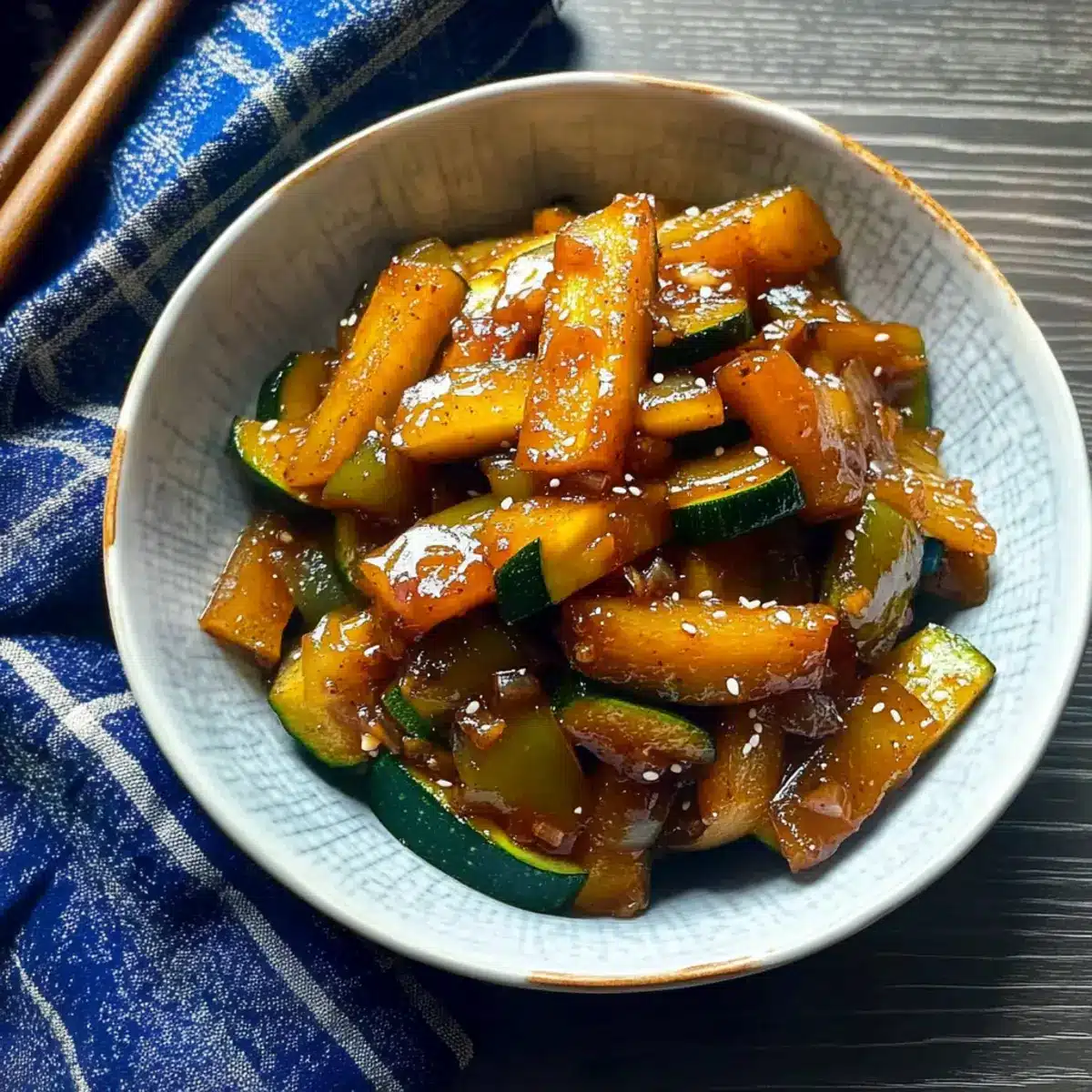
Why Choose Hibachi Vegetables Today?
Quick preparation: This dish is ready in under 15 minutes, making it an ideal choice for busy weeknights.
Vibrant flavors: Enjoy the delightful sweetness of sautéed zucchini and onions perfectly complemented by a savory soy sauce glaze.
Plant-based goodness: Packed with nutrition, this recipe is not only vegetarian but also a great way to add colorful veggies to your meals.
Versatile side: Serve it alongside grilled meats or atop a bed of rice for a complete, satisfying meal.
Crowd-pleaser: Whether for a casual family dinner or entertaining guests, Hibachi Vegetables never fail to impress and satisfy taste buds!
Hibachi Vegetables Ingredients
For the Stir-Fry
- Sesame Oil – Adds a nutty flavor and aroma, crucial for an authentic hibachi taste; vegetable oil can be used as a substitute if necessary.
- Onion (1 medium) – Provides a subtle sweetness and depth; shallots can be a milder alternative if preferred.
- Zucchini (2 medium) – Contributes moisture and texture, soaking up sauce flavors; feel free to use yellow squash for a tasty twist.
For the Sauce
- Soy Sauce (2 tablespoons) – Serves as the main seasoning, offering saltiness and umami; tamari is a great gluten-free option.
- Sesame Seeds (1 tablespoon) – Sprinkled on top for crunch and flavor; omit if you’re allergic, or substitute with any other seeds.
- Kosher Salt (1/2 teaspoon) – Enhances overall flavor; adjust based on the saltiness of your soy sauce.
- Black Pepper (1/2 teaspoon) – Adds a hint of spice; can be omitted for a milder flavor.
With these Hibachi Vegetables ingredients in your pantry, delicious stir-fried zucchini and onions are just moments away!
Step‑by‑Step Instructions for Hibachi Vegetables
Step 1: Heat the Skillet
Begin by placing a large skillet over medium-high heat and adding 1 tablespoon of sesame oil. Allow the oil to heat for about 30 seconds until it shimmers, indicating that it’s ready for cooking. This step is crucial to developing that authentic hibachi flavor as you prepare your sizzling Hibachi Vegetables.
Step 2: Sauté the Onions
Once the oil is hot, toss in the sliced onion and sauté for 3 minutes. Stir occasionally until the onions become translucent and slightly softened. The sweet aroma will fill your kitchen, hinting at the delicious Hibachi Vegetables that are about to come to life.
Step 3: Add the Zucchini
Introduce the sliced zucchini to the pan, mixing gently. Cook for an additional 4 to 5 minutes, allowing them to brown slightly without stirring them too often. You want to achieve a golden sear on the zucchini while the vegetables maintain a tender-crisp texture, perfect for your hibachi dish.
Step 4: Combine the Sauces and Seasonings
Pour in the remaining tablespoon of sesame oil along with 2 tablespoons of soy sauce, 1 tablespoon of sesame seeds, 1/2 teaspoon of kosher salt, and 1/2 teaspoon of black pepper. Stir together quickly to coat the vegetables evenly with this savory mixture, enhancing the flavor profile of your Hibachi Vegetables.
Step 5: Finish Cooking
Allow the vegetables to cook for another 1 to 2 minutes, stirring occasionally until they are fully cooked and the sauce slightly thickens, glistening on the veggies. The vibrant colors and delicious aroma will signal that your Hibachi Vegetables are ready to serve warm, creating a delightful side dish for any meal.
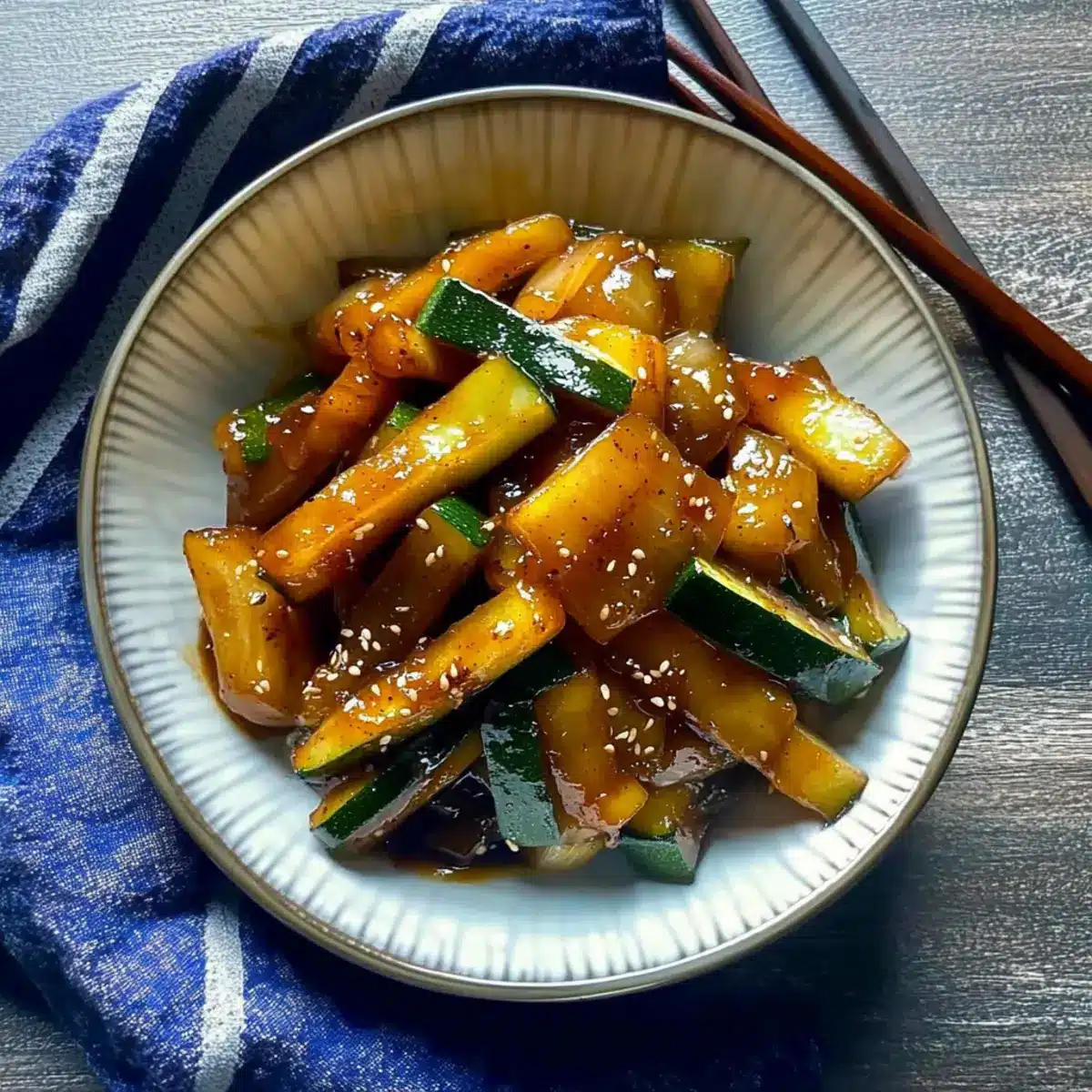
Storage Tips for Hibachi Vegetables
Fridge: Store leftover Hibachi Vegetables in an airtight container for up to 2 days in the refrigerator to keep them fresh and flavorful.
Freezer: For longer storage, freeze the vegetables in a sealed bag for up to 2 months. However, note that freezing may alter their texture.
Reheating: When reheating, use a skillet over medium heat to maintain the crispness of the veggies. Avoid the microwave to prevent sogginess.
Room Temperature: If serving immediately after cooking, allow Hibachi Vegetables to cool for no more than 2 hours at room temperature before refrigerating to ensure food safety.
Make Ahead Options
Hibachi Vegetables are a fantastic option for meal prep! You can slice the zucchini and onions up to 24 hours in advance—just store them in an airtight container to keep them fresh. Additionally, you can pre-mix the soy sauce, sesame oil, and seasonings, storing them separately in the refrigerator. This way, when you’re ready to cook, simply heat your skillet and sauté the vegetables with the prepped sauce, finishing in mere minutes. To retain that delightful texture and flavor, avoid chopping veggies too far in advance, as they can lose their vibrancy. Enjoy delicious Hibachi Vegetables with minimal last-minute effort!
Hibachi Vegetables: Flavorful Customization Ideas
Feel free to explore these tempting variations and substitutions to personalize your Hibachi Vegetables and make them truly your own!
-
Add Protein: Toss in firm tofu or shrimp for extra protein. It’s an easy way to turn this side dish into a main course that’s satisfying and filling.
-
Spicy Kick: Sprinkle in chili flakes or a dash of sriracha to heat things up. The added spice will awaken your taste buds, making each bite an exciting adventure.
-
Swap Veggies: Use bell peppers, mushrooms, or carrots for a colorful twist. Each vegetable brings its unique flavor and texture, making your dish even more delightful.
-
Crispy Finish: For added crunch, toss in crushed peanuts or cashews just before serving. The nutty flavor complements the dish beautifully while introducing a satisfying texture.
-
Dairy-Free Creaminess: Mix in a spoonful of coconut cream or nut butter for a rich, creamy experience. This creates a wonderful contrast with the crispy vegetables.
-
Herbal Notes: Fresh herbs like cilantro or basil can elevate your flavors. Finely chop and sprinkle them on top right before serving for a fresh, fragrant finish.
-
Zesty Citrus: A squeeze of fresh lemon or lime juice can brighten the dish. The citrus brightness enhances the savory elements and adds a refreshing edge.
For even more delightful veggie options, consider adding a side of miso soup or serve with a refreshing Asian slaw. These pair wonderfully with your customized Hibachi Vegetables, creating a nourishing and vibrant meal experience!
Expert Tips for Hibachi Vegetables
• Uniform Cuts: Ensure all your vegetables are cut to similar sizes for even cooking and a beautiful presentation.
• Let It Sear: Resist the temptation to stir constantly; letting the zucchini and onions sit in the skillet helps achieve that delightful golden-brown sear.
• Taste Test: Always taste your seasoning before adding more salt. Soy sauce can be salty, and you may not need additional kosher salt.
• Fresh Ingredients: Use fresh vegetables for the best texture and flavor in your Hibachi Vegetables. Avoid stale ingredients that can diminish the dish’s bright quality.
• Mix and Match: Feel free to experiment with other veggies, like bell peppers or snap peas, to create a more colorful and varied dish that still captures that hibachi essence.
What to Serve with Hibachi Vegetables?
Dive into a world of flavor where quick, vibrant dishes make every meal unforgettable.
-
Grilled Chicken: Juicy, charred chicken complements the freshness of the vegetables, creating a satisfying balance of flavors.
-
Teriyaki Tofu: A savory and slightly sweet tofu option enhances the dish while keeping it entirely plant-based, perfect for vegetarian menus.
-
Fried Rice: The fluffy texture and distinct taste of fried rice create a comforting side that pairs beautifully with the zesty hibachi essence.
-
Miso Soup: A warm bowl of miso soup adds a soothing contrast, enriching your dining experience with umami flavor profiles.
-
Steamed Jasmine Rice: Light and fluffy jasmine rice acts as a perfect base, soaking up the delicious sauce from the hibachi vegetables.
-
Sesame Noodles: With their nutty flavor and chewy texture, sesame noodles provide an additional layer of Asian-inspired comfort to your meal.
-
Fresh Cucumber Salad: This crisp, refreshing salad offers a bright crunch, enhancing the meal’s textures while balancing the savory elements.
-
Chilled Green Tea: A delightful drink option, chilled green tea complements the dish’s flavors while providing a refreshing finish.
-
Chocolate Mochi: For dessert, these sweet, chewy treats give a satisfying end to your meal, melding beautifully with the hibachi theme.
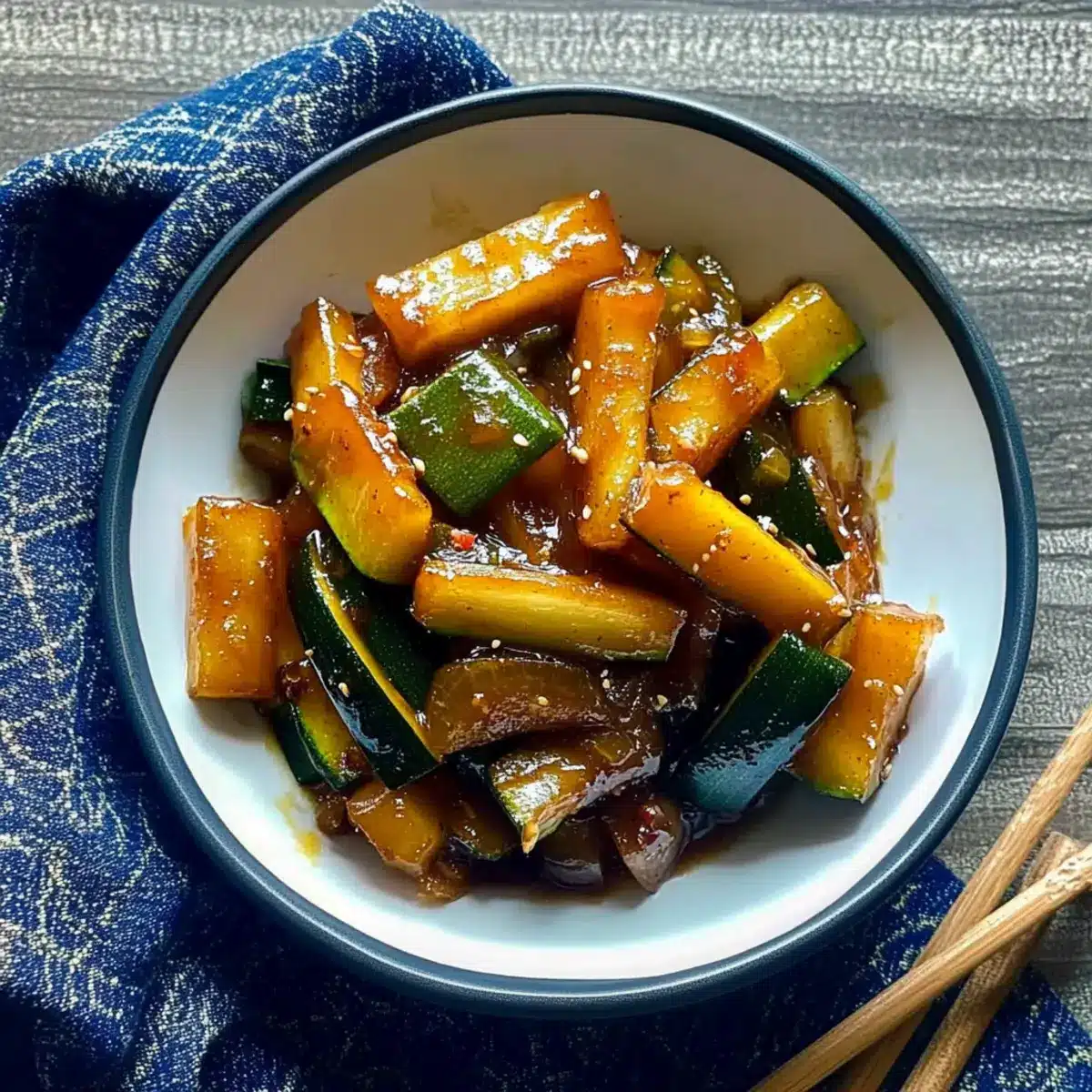
Hibachi Vegetables Recipe FAQs
What is the best way to select zucchini and onions for this recipe?
Absolutely! When choosing zucchini, look for firm, unblemished ones with a vibrant dark green color. Avoid any that have dark spots all over, which indicate overripeness. For onions, select those that are dry, heavy for their size, and free from soft spots or sprouting.
How should I store leftover Hibachi Vegetables?
Very good question! After enjoying your Hibachi Vegetables, store any leftovers in an airtight container in the refrigerator. They should stay fresh for about 2 days. For optimal flavor and texture, reheat in a skillet over medium heat, as this will help maintain their crispness.
Can I freeze Hibachi Vegetables for later use?
Definitely! To freeze, first let the Hibachi Vegetables cool completely. Then, place them in a freezer-safe bag or container, ensuring to squeeze out as much air as possible. They can be stored in the freezer for up to 2 months. Just keep in mind that freezing may alter their texture slightly upon reheating.
What if my vegetables aren’t cooking evenly?
No worries! If you find that your zucchini and onions are not cooking evenly, check your heat level. If it’s too high, the outside may brown before the inside cooks, so try reducing the heat slightly. Also, cutting your vegetables into uniform sizes can help them cook more evenly. Remember, resist the urge to stir too often—it’s okay to let them sear for a bit!
Are there any dietary considerations I should be aware of?
Absolutely! Since this recipe is naturally plant-based and vegetarian, it’s generally a great choice for many dietary needs. However, if you’re cooking for someone with allergies, be cautious with soy sauce, which contains gluten. You can easily substitute it with tamari for a gluten-free option. Always double-check for any allergies with sesame seeds, as they are common allergens too.
How can I add more variety to my Hibachi Vegetables?
Great idea! You can absolutely mix things up! Consider adding bell peppers, mushrooms, or snap peas for a colorful medley. I personally love adding tofu for a protein boost or even shrimp if you want to go non-vegetarian. You could also spice things up with a sprinkle of chili flakes or a dash of sriracha in the sauce!
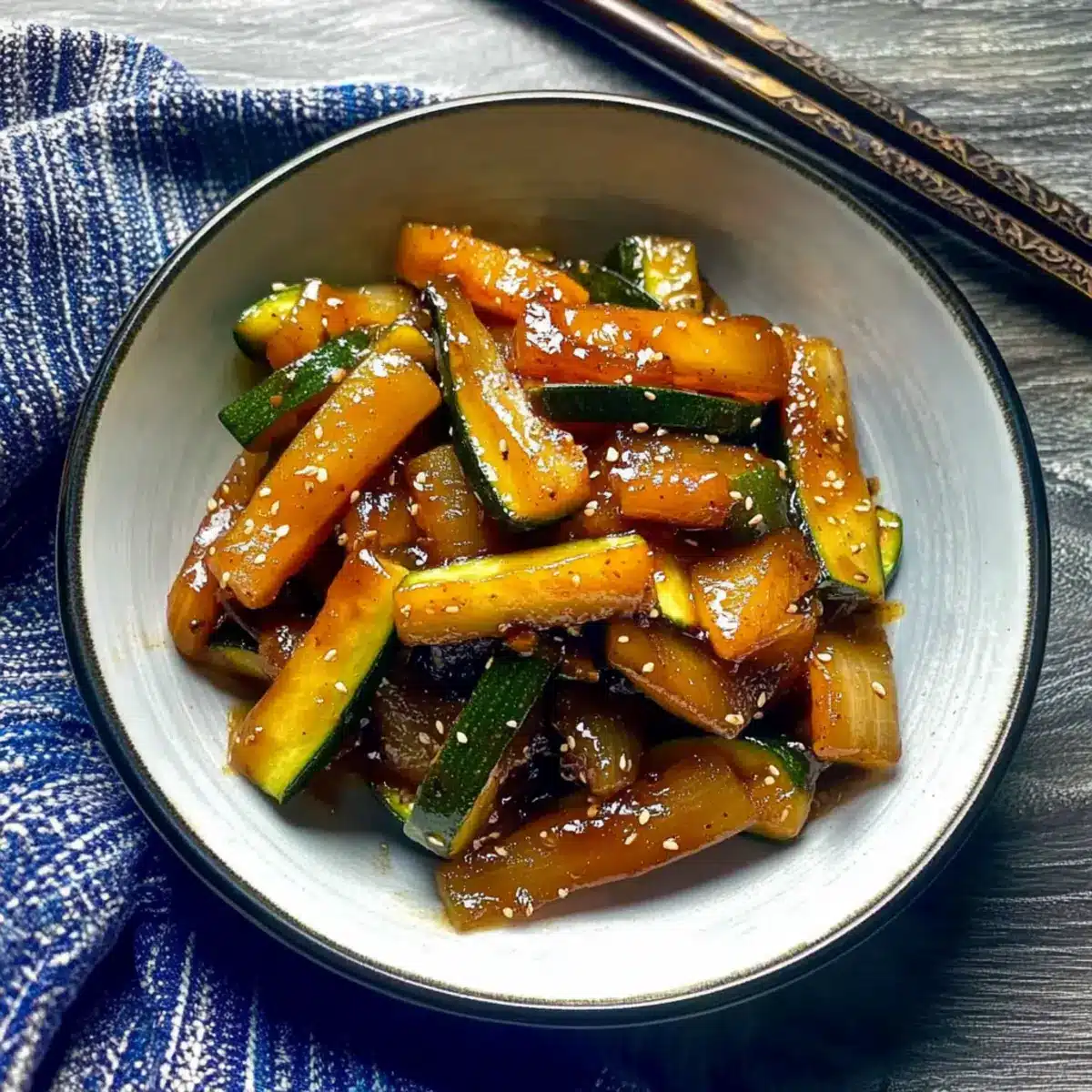
Savor Hibachi Vegetables: Quick Sautéed Zucchini & Onions
Ingredients
Equipment
Method
- Begin by placing a large skillet over medium-high heat and adding 1 tablespoon of sesame oil. Allow the oil to heat for about 30 seconds until it shimmers.
- Once the oil is hot, toss in the sliced onion and sauté for 3 minutes until translucent and slightly softened.
- Introduce the sliced zucchini to the pan, cooking for an additional 4 to 5 minutes to achieve a golden sear.
- Pour in the remaining tablespoon of sesame oil, soy sauce, sesame seeds, kosher salt, and black pepper, stirring quickly to coat the vegetables.
- Allow the vegetables to cook for another 1 to 2 minutes until fully cooked and the sauce slightly thickens.
Leave a Reply