
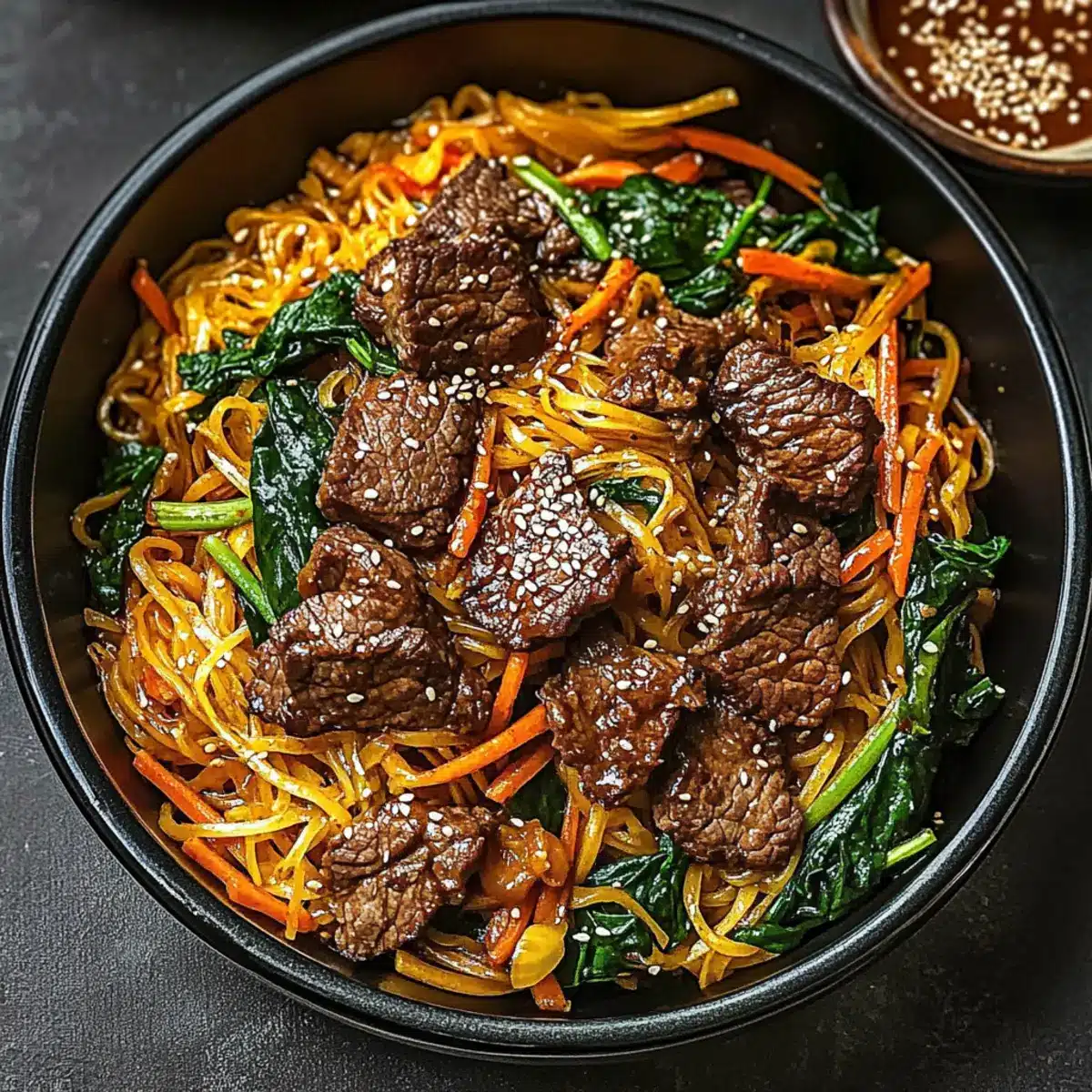
Stepping into my kitchen with a craving for something vibrant and satisfying, I always find myself reaching for the colorful array of ingredients that come together to create a hearty bowl of Japchae. These sweet potato glass noodles, stir-fried with savory beef and a rainbow of fresh vegetables, embody the comforting essence of Korean cuisine. What’s truly delightful about this classic recipe is not only its glorious, chewy texture but also its flexibility; it can easily transform to suit your tastes—beef, chicken, or even tofu can serve as its protein star. Plus, it’s gluten-free and light on calories, making it the perfect choice for a quick weeknight meal or a stellar dish for gatherings. Are you ready to dive into the glorious world of Japchae and discover your own personal twist?
Why is Japchae a Must-Try?
Flavorful Fusion: Each bite of Japchae combines savory beef, fresh veggies, and chewy sweet potato noodles for a sumptuous experience.
Endless Customization: Whether you prefer tofu, chicken, or a medley of seasonal vegetables, feel free to make this dish your own!
Light Yet Satisfying: At around 489 calories per serving, this dish is both comforting and health-conscious—perfect for weeknight dinners or festive gatherings.
Quick Cooking: With a straightforward stir-fry method, you can bring this vibrant Korean dish to your table in no time.
Cultural Connection: Enjoy a dish that symbolizes prosperity and health, often served during Korean celebrations—making it a special addition to any meal.
Japchae Ingredients
For the Noodles
• Sweet Potato Glass Noodles – These noodles provide a delightful chewy texture; substitute with regular rice noodles if desired.
For the Protein
• Beef (thinly sliced) – Adds richness and protein; feel free to swap it for chicken or tofu for a lighter option.
For the Vegetables
• Carrots – Not only do they add vibrant color, but they’re also crunchy; substitute with bell peppers or zucchini for variety.
• Bell Peppers – They inject sweetness into the dish; seasonal vegetables can also be used to enhance freshness.
• Spinach – Provides nutrition and complements the flavors beautifully; kale can be used as a robust substitute here.
For the Flavor Base
• Soy Sauce – Essential for adding depth and umami; low-sodium soy sauce is a great healthier option.
• Sesame Oil – This oil adds a nutty aroma; light vegetable oil can be used if you’re out of sesame oil.
For Garnishing
• Green Onions – These add a fresh pop of flavor; chives can serve as a good alternative if you don’t have green onions on hand.
Enjoy crafting your Japchae with this delightful assortment of ingredients!
Step‑by‑Step Instructions for Japchae
Step 1: Soak the Noodles
Begin by soaking the sweet potato glass noodles in a large bowl of warm water for about 30 minutes. Ensure that the noodles are fully submerged, as this will help soften them. Once they become tender and translucent, drain them and set aside while you prepare the rest of the ingredients.
Step 2: Cook the Beef
In a large skillet or wok, heat 2 tablespoons of sesame oil over medium-high heat. Once the oil shimmers, add the thinly sliced beef and stir-fry for about 3-4 minutes, or until it’s browned and cooked through. Remove the beef from the pan and set it aside, leaving any drippings for flavor.
Step 3: Stir-Fry the Vegetables
In the same pan, add a little more sesame oil if needed and toss in your chopped vegetables. Stir-fry for approximately 4-5 minutes, or until the veggies are vibrant and slightly tender but still crisp. Keep the heat high to get a good sear and maintain their color and crunch.
Step 4: Combine Noodles and Beef
Return the cooked beef to the skillet with the stir-fried vegetables. Gently add the soaked sweet potato noodles, making sure to mix everything well. Use tongs to toss the ingredients together, ensuring the noodles are fully integrated with the colorful veggies and savory beef.
Step 5: Add Flavoring
Pour in 3-4 tablespoons of soy sauce over the mixture and drizzle with an extra teaspoon of sesame oil for added flavor. Stir everything together for another 2-3 minutes until the noodles are heated through and coated with the sauce, creating a deliciously glossy finish.
Step 6: Garnish and Serve
Finally, remove the pan from heat and sprinkle generously with chopped green onions for a fresh bite. Serve the warm Japchae immediately on a large platter or in individual bowls, allowing everyone to enjoy this vibrant dish while it’s still fresh and enticing.
Storage Tips for Japchae
-
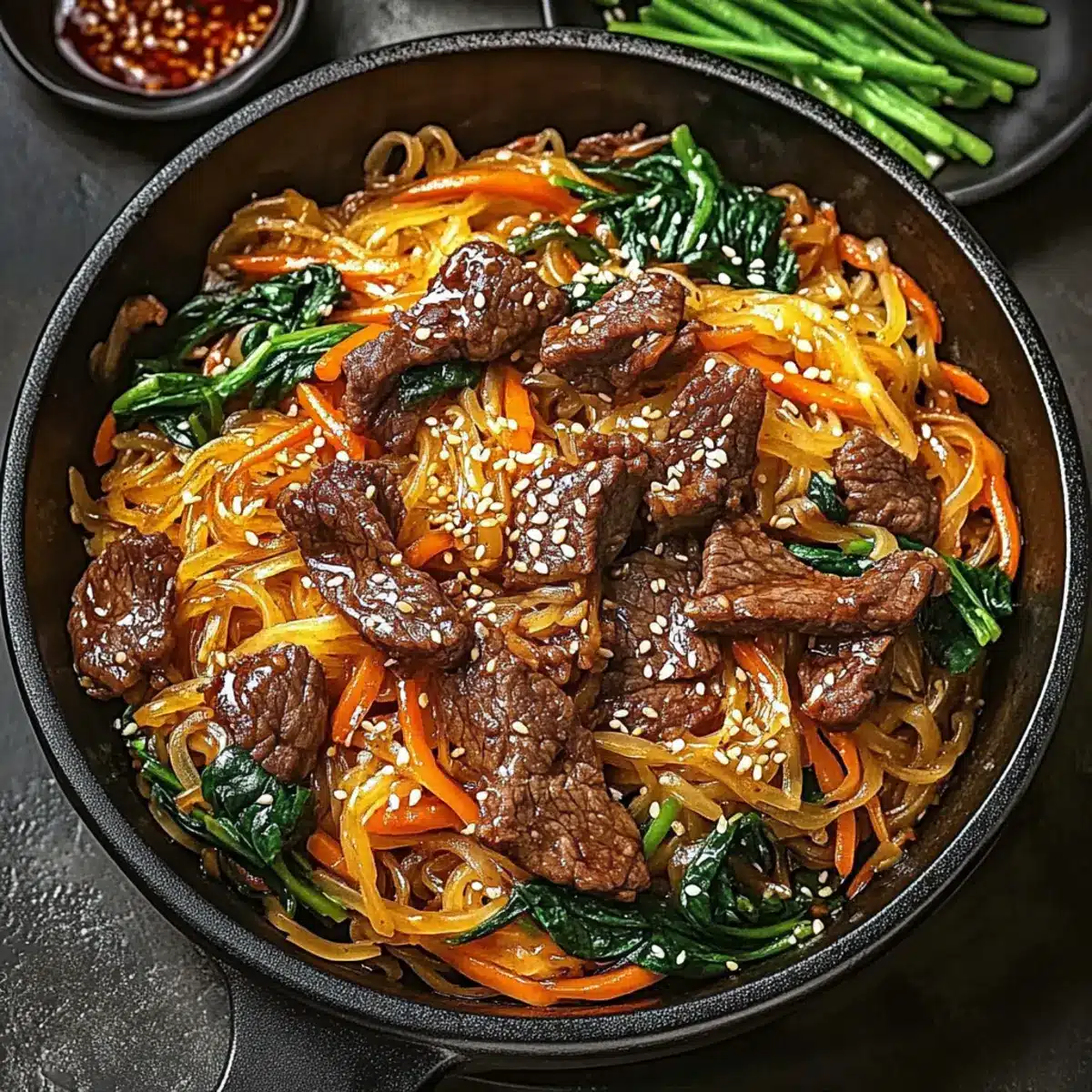
Fridge: Store leftover Japchae in an airtight container in the refrigerator for up to 3 days. Enjoy it as a quick lunch or dinner option!
-
Freezer: Freeze Japchae for up to 2 months in a freezer-safe bag. Make sure to remove as much air as possible to prevent freezer burn.
-
Reheating: When ready to eat, reheat in a pan over medium heat with a splash of water to maintain moisture and restore that delightful chewiness of the sweet potato noodles.
-
Room Temperature: For serving, it’s best to avoid keeping Japchae at room temperature for more than 2 hours to ensure food safety.
Expert Tips for Japchae
-
Prep Ingredients First: Gather and chop all your vegetables and protein before starting to cook. It streamlines the process and ensures even cooking.
-
High Heat Helps: Always cook on high heat when stir-frying. This gives your Japchae a delightful texture and helps to lock in flavors without steaming the ingredients.
-
Don’t Overcook Noodles: When soaking sweet potato noodles, check frequently to ensure they remain slightly chewy. Overcooked noodles can become mushy and unappealing.
-
Customize Your Veggies: Feel free to modify your vegetable choices based on what you have at home. Seasonal options can elevate the freshness of your Japchae!
-
Taste as You Cook: Always sample your stir-fry as it cooks. Adjust the soy sauce and seasoning to achieve the perfect savory balance before serving.
Make Ahead Options
Japchae is an excellent dish for meal prep, allowing you to save time on busy weeknights! You can soak the sweet potato noodles and chop the vegetables up to 24 hours in advance, then store them separately in the refrigerator to maintain their freshness. If you’re preparing ahead with meat, cook the beef or protein of choice and refrigerate for up to 3 days. When you’re ready to enjoy your delightful Japchae, simply stir-fry the veggies and cooked protein together, add the soaked noodles and soy sauce, and finish off with green onions. This way, you’ll have a deliciously quick meal with minimal effort!
What to Serve with Classic Korean Japchae?
Pair your meal with delightful sides that will elevate the experience and create a well-rounded dining delight.
- Kimchi: This traditional fermented side adds a spicy kick, balancing the sweet and savory flavors of Japchae beautifully.
- Pickled Radish: Crisp and tangy, pickled radish offers a refreshing contrast to the richness of the noodles, enhancing every bite.
- Cucumber Salad: A cool, crunchy cucumber salad dressed in sesame oil complements the warm noodles and adds a light, fresh texture.
- Steamed Rice: Soft, fluffy rice is a classic accompaniment, perfect for soaking up the delicious sauce and rounding out your meal.
- Korean Fried Chicken: For those craving protein, the crispy, flavorful Korean fried chicken makes a hearty pairing that delights the palate.
- Sesame Broccoli: Tender broccoli tossed in sesame oil provides a nutritious, nutty addition that mirrors the flavors in your Japchae.
- Miso Soup: Light and savory, miso soup warms up your meal, providing a comforting broth that complements the stir-fried noodles.
- Green Tea: Enjoy a soothing cup of green tea after the meal; its subtle earthiness refreshes the palate while aiding digestion.
Japchae
Feel free to elevate your Japchae with these flavorful twists that will make your meal even more special!
- Gluten-Free: Stick to sweet potato noodles or swap in gluten-free soy sauce for an entirely gluten-free dish!
- Protein Swap: Replace beef with grilled chicken or tofu for a lighter, equally delicious twist on this classic recipe.
- Spice it Up: Add a spoonful of Korean gochujang to your sauce for a spicy kick that’ll invigorate your taste buds like no other.
- Veggie Boost: Toss in shiitake mushrooms or zucchini for a delightful mix of textures that adds heartiness and flavor!
- Noodle Variation: If you can’t find sweet potato noodles, try using rice noodles for a different but still enjoyable texture.
- Herb Infusion: Add fresh herbs like cilantro or basil at the end for a fresh, aromatic flavor that brightens up the dish.
- Nuts for Crunch: Sprinkle toasted sesame seeds or crushed peanuts on top to introduce a satisfying crunch that enhances every bite.
- Citrus Zing: A squeeze of lime just before serving adds an unexpected burst of brightness that beautifully complements the savory flavors.
With these variations, you can personalize your Japchae experience, turning it into a masterpiece uniquely your own! Don’t hesitate to explore even more ways to create this beloved dish by checking other options like my delicious kimchi or flavorful Korean pickles for a delightful side!
Japchae Recipe FAQs
How do I choose the right sweet potato glass noodles?
When selecting sweet potato glass noodles, look for packs that are translucent and firm without dark spots or blemishes. They should feel light and slightly bouncy to the touch. If unavailable, you can substitute them with regular rice noodles, although the texture will differ slightly.
What’s the best way to store leftover Japchae?
To store leftover Japchae, place it in an airtight container and refrigerate for up to 3 days. To reheat, add a splash of water to a pan and warm it over medium heat, ensuring the noodles retain their chewiness and the dish doesn’t dry out.
Can I freeze Japchae, and if so, how?
Absolutely! You can freeze Japchae for up to 2 months. To do so, allow the dish to cool completely, then transfer it into a freezer-safe zip-top bag. Make sure to squeeze out as much air as possible to prevent freezer burn. When ready to enjoy, thaw it in the fridge overnight and reheat in a pan with a bit of water.
What if my noodles are too mushy after soaking?
If your sweet potato noodles become mushy after soaking, it may be that they were over-soaked. Aim to soak them for about 30 minutes or until they’re slightly chewy and translucent. If they do become mushy, the texture will likely be off, but they can still be used. Just be careful not to overcook them during stir-frying.
Is Japchae safe for people with gluten allergies?
Yes, Japchae is generally a gluten-free dish due to the use of sweet potato glass noodles. However, always double-check the labels on soy sauce and other condiments, as some may contain gluten. Opting for gluten-free soy sauce will keep the entire dish suitable for those avoiding gluten.
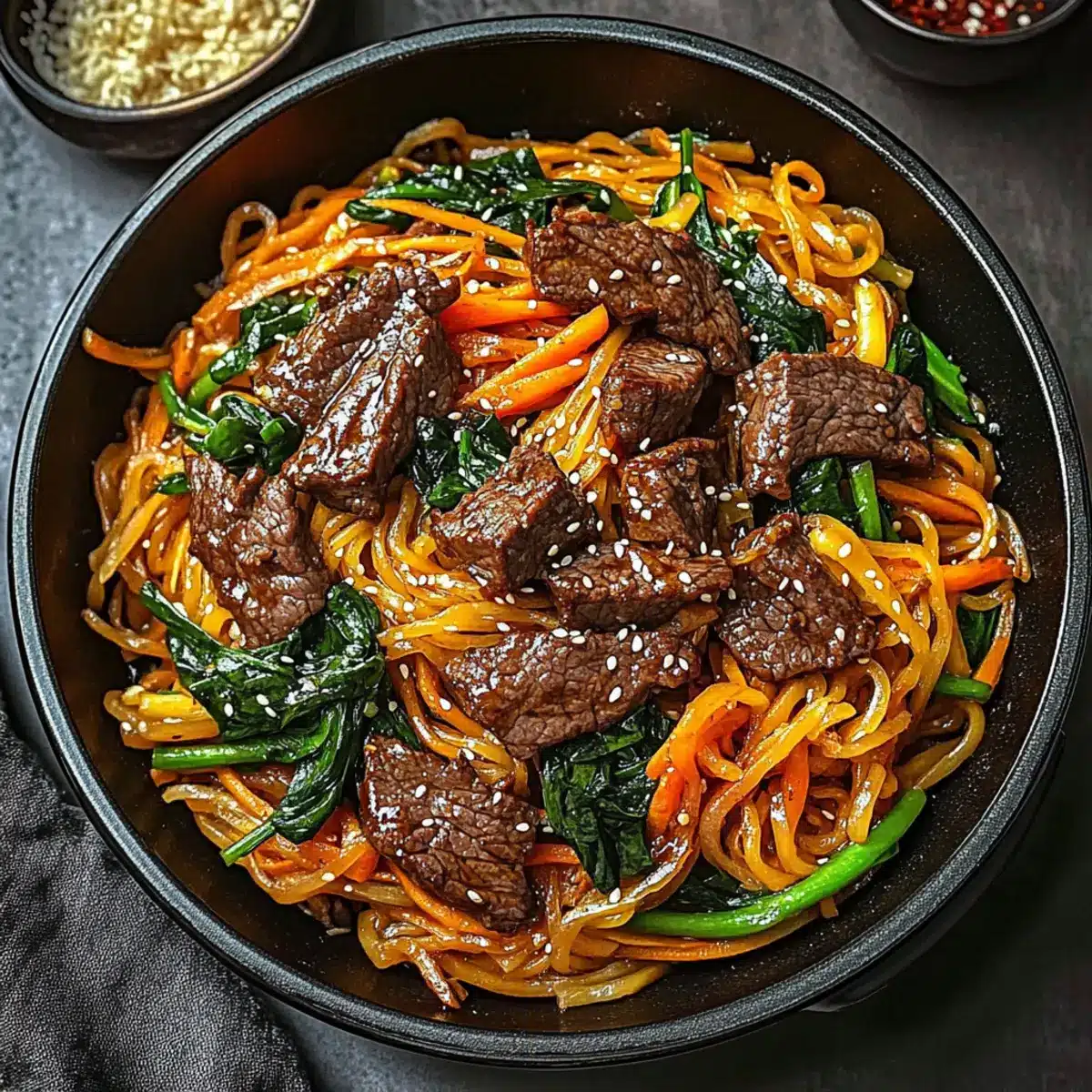
Savor Japchae: Irresistibly Chewy Korean Noodles at Home
Ingredients
Equipment
Method
- Soak the noodles in a large bowl of warm water for about 30 minutes. Once tender and translucent, drain and set aside.
- Heat 2 tablespoons of sesame oil over medium-high heat in a skillet. Stir-fry the beef for 3-4 minutes until browned. Remove the beef and set aside.
- In the same pan, add more sesame oil if needed, toss in chopped vegetables, and stir-fry for 4-5 minutes until vibrant and slightly tender.
- Return cooked beef to the skillet with stir-fried vegetables. Add soaked sweet potato noodles and mix well.
- Pour in soy sauce and drizzle with an extra teaspoon of sesame oil. Stir for another 2-3 minutes until heated through and glossy.
- Remove from heat, sprinkle with chopped green onions, and serve warm.
Leave a Reply